Learn With and About
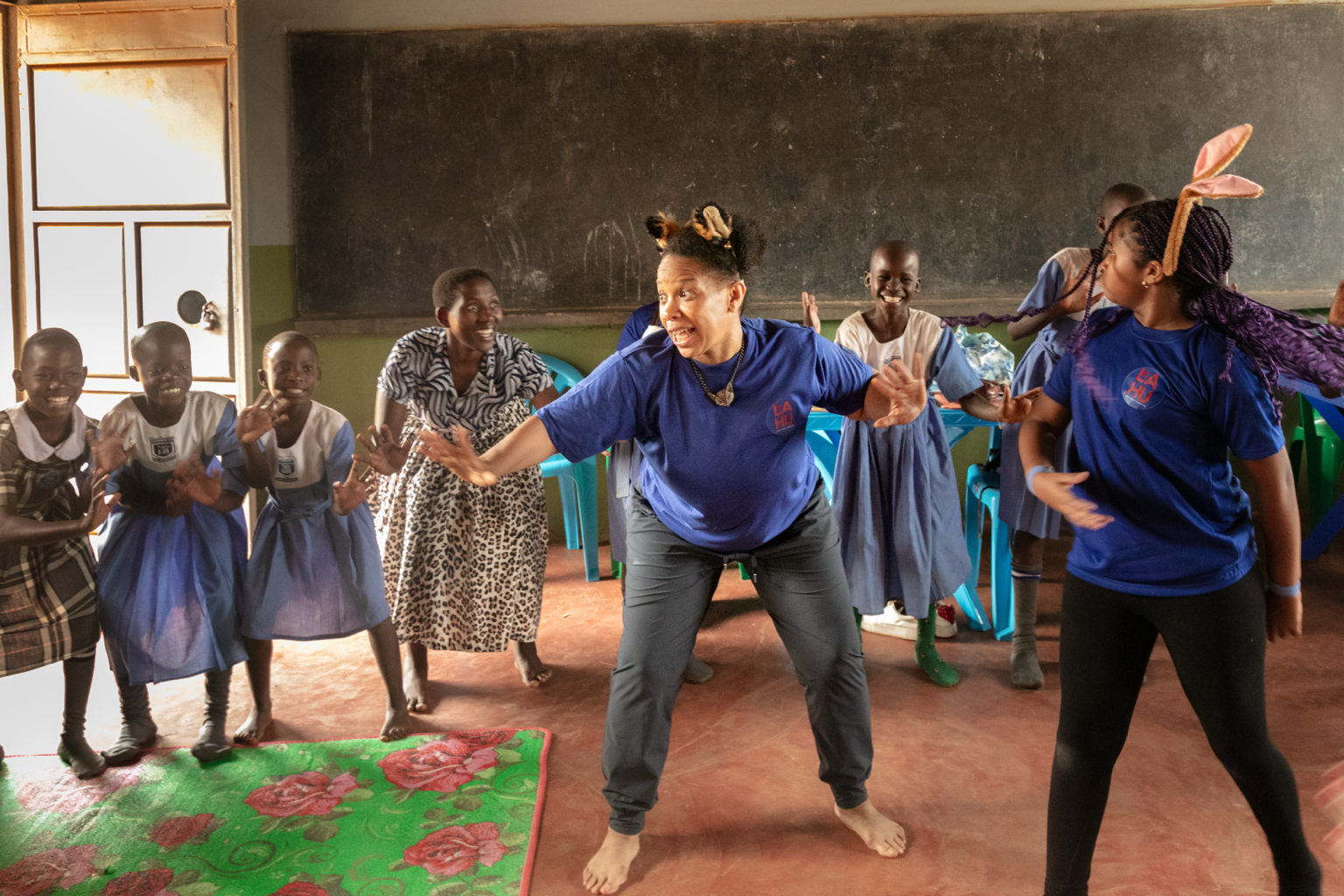
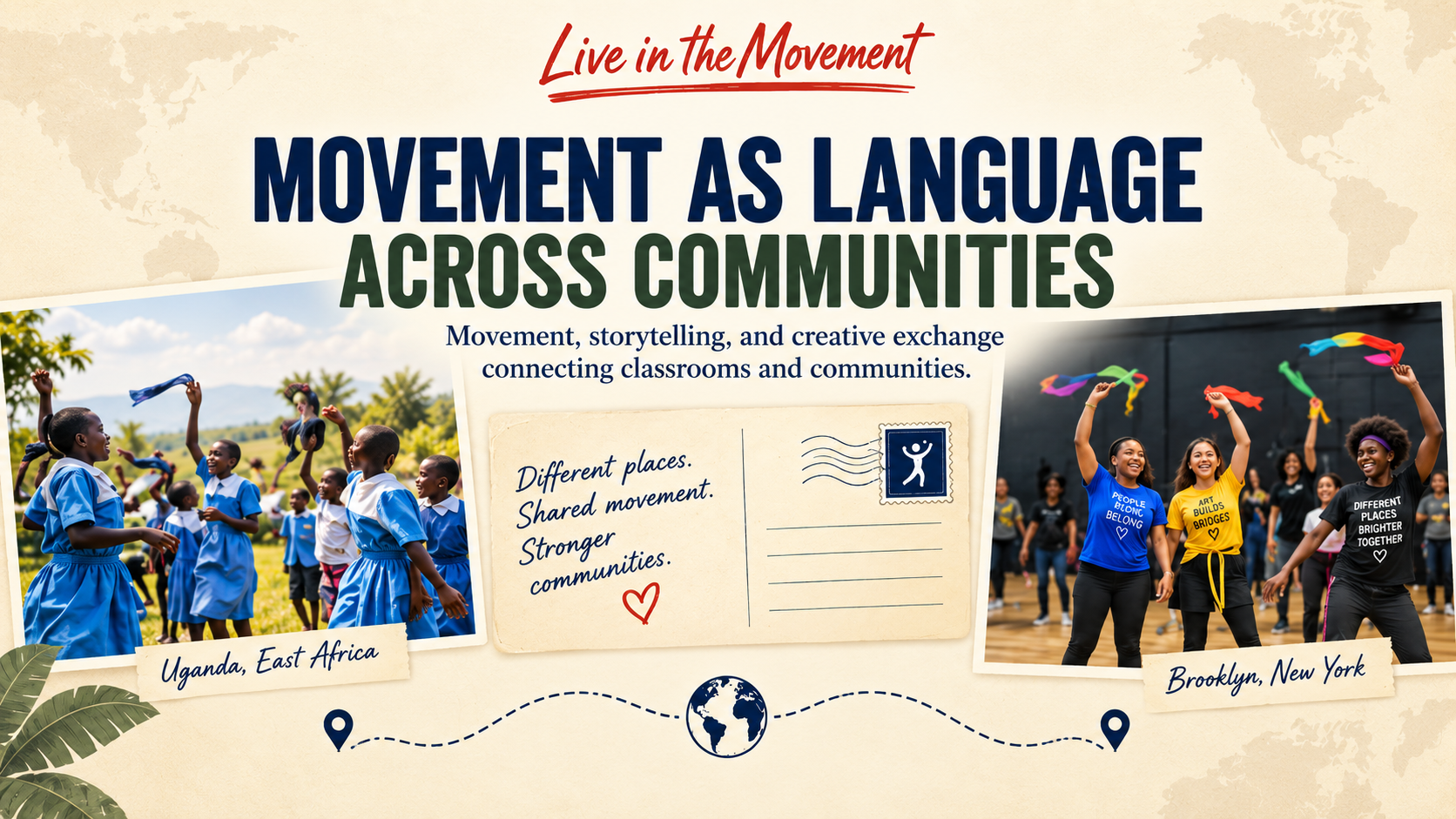
Movement as Language Across Communities is a social studies learning experience that uses movement, storytelling, and creative exchange to help students learn with and about young people in different communities.
Rather than only studying another place from a distance, students notice aspects of their own daily lives, share something about their community, and ask questions of students elsewhere.
How the Lesson Works
Students begin with what they already know: their own daily lives, movements, routines, and communities. From there, they create, share, ask questions, and respond to what they learn from students in another place.
1. Notice
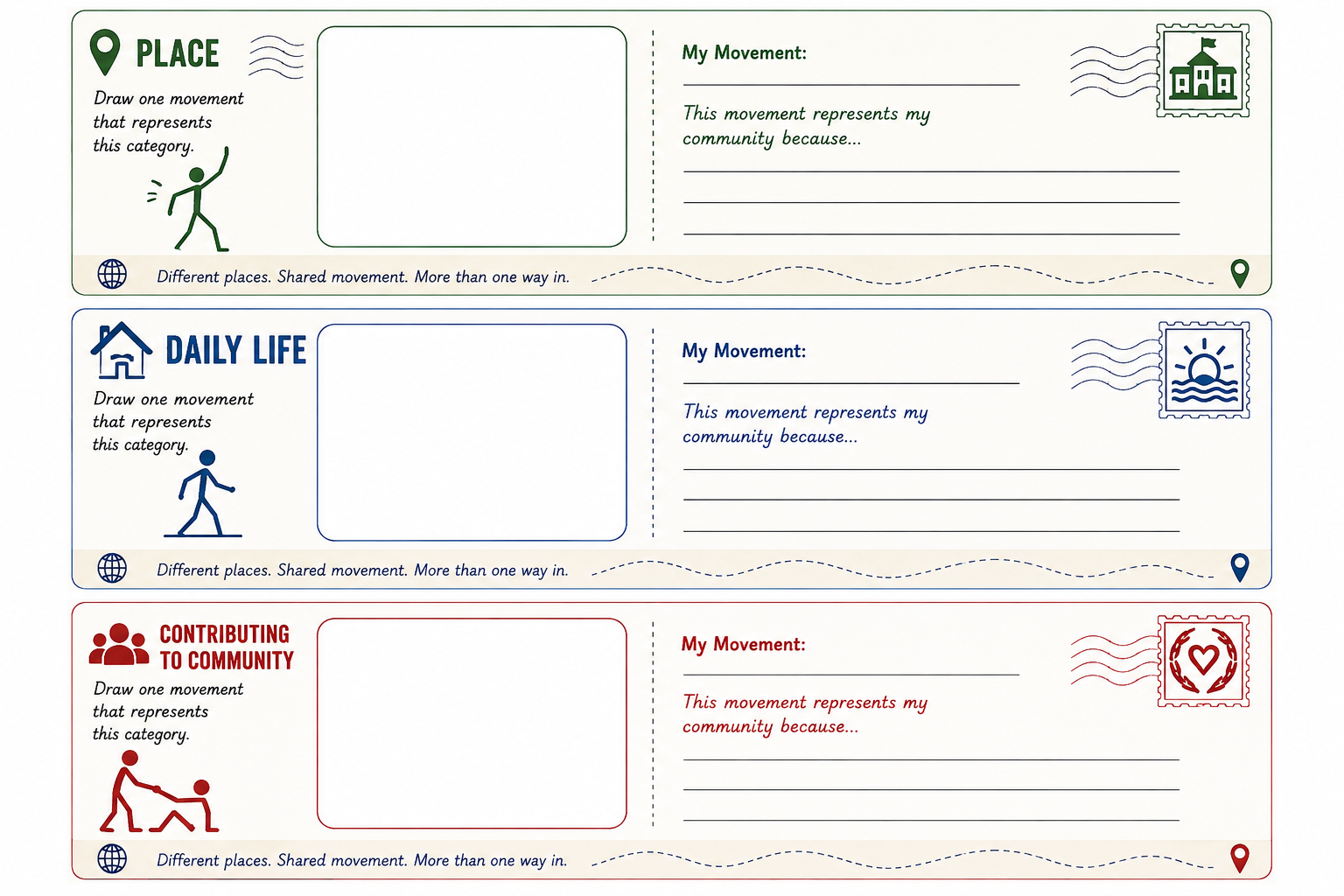
Choose a category such as Place, Daily Life, or Contributing to Community and identify a movement that connects to it.
2. Create
Draw or describe the movement and explain what it represents about your community.
3. Share
Use the postcard as a way to exchange ideas, experiences, and questions with another classroom.
4. Ask
What do you want to know about how students in another community move, live, and contribute?
5. Reflect
What felt familiar? What felt different? What did you learn with and about one another?
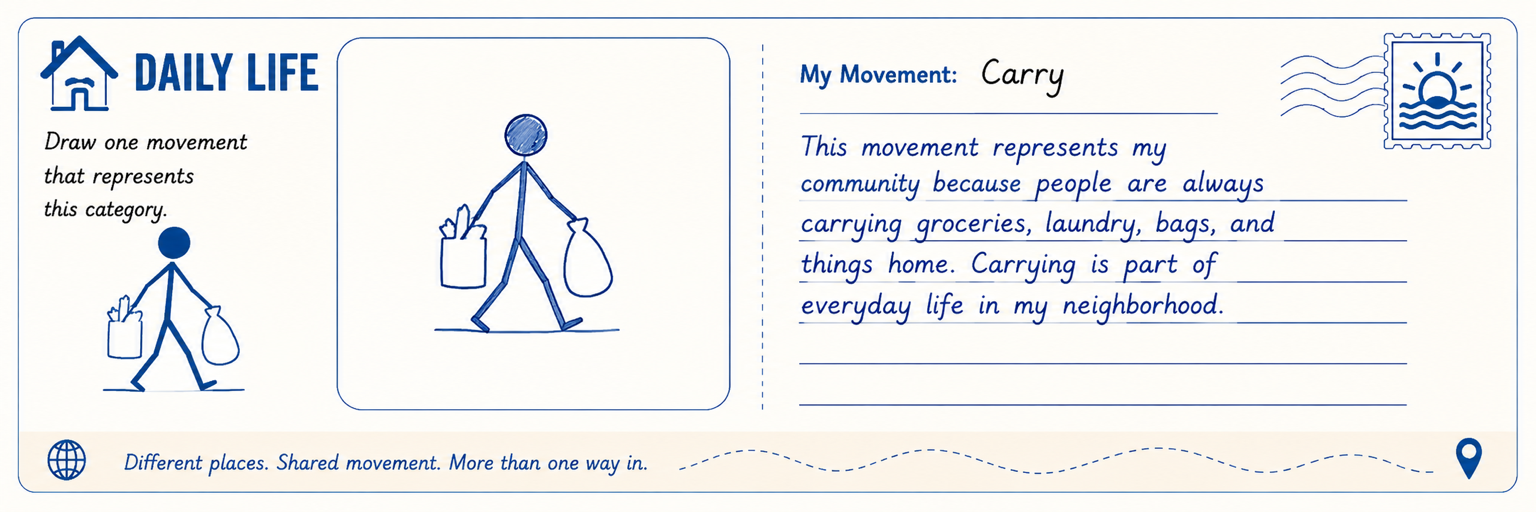
Example: A student chooses “carry” as a daily life movement and explains how it connects to everyday life in their neighborhood.